
Washington County Parole and Probation
Maryland assigns two different bodies to post-release supervision. The Maryland Parole Commission, or MPC, decides whether an eligible person should receive parole. The Division of Parole and Probation, or DPP, supervises people on parole, probation, and mandatory release. A judge orders probation. MPC orders parole. Mandatory release follows a statutory release process after applicable diminution credits, which are credits that may reduce time in confinement. The source of the order tells a reader where to verify the status.
Probation does not prove that a person served a state-prison sentence. A Washington County judge may suspend part of a sentence and order probation, sometimes after a short local jail stay and sometimes without state imprisonment. Parole is different. It permits service of part of a state or qualifying local sentence in the community under stated conditions. Both can involve reporting and limits, but their legal records begin in different places.
| Status | Who orders it | Best public starting point |
|---|---|---|
| Parole | Maryland Parole Commission | MPC action, then the DPP verification route |
| Probation | District or Circuit Court | Maryland Judiciary Case Search and the signed court order |
| Mandatory release | Maryland law and DPSCS release process | DPSCS release record, VINE event, and DPP |
| Day Reporting | Local correctional placement | Washington County Day Reporting Center |
- Parole
- Conditional community release before the full sentence expires, based on an MPC decision.
- Probation
- Court-ordered supervision in place of, or after, part of a sentence.
- Discharge
- The formal end of the supervision obligation, not merely release from a building.
- Absconder
- A person alleged by supervision authorities to have stopped complying or reporting.
Note: The authority named in the order, not the last building occupied, determines the right Washington County supervision record.
Verify Washington County Post-Release Supervision
Maryland has no public person-by-person DPP lookup. The DPSCS locator is also a current-prison tool, not a supervision list. It removes people no longer in state custody for any reason. A missing result does not show parole, probation, discharge, or even a confirmed community release. Verification therefore requires a short chain based on the type of custody and the controlling order.
- Identify the last custody source. Separate Washington County Detention Center from MCI-H, MCTC, RCI, federal custody, or another jail.
- Search Maryland Judiciary Case Search for a Washington County probation order, sentence, violation, or related case number.
- For parole or mandatory release, review the MPC page and seek the public portion of the parole action. A hearing date alone is not a grant.
- Check a matched person through Maryland VINE. Treat any event as release from the reporting source, then corroborate it.
- Contact the DPP Hagerstown Field Office for the lawful verification path. Do not expect protected reporting details or private conditions.
- Request the executed release or movement record from the agency that last held the person when the public sources do not resolve the status.
The full county search and release-record chain is available on the Washington County released inmates home page. Use its custody-source test before drawing a conclusion from a name that disappeared. State the result narrowly, such as “the court ordered probation” or “MPC granted parole,” rather than assuming all custody and supervision have ended.
Note: A court docket is a summary; request the signed order when the exact supervision language controls the answer.
Washington County Parole Decision Records
MPC considers parole suitability case by case for eligible people serving qualifying state or local terms. Its public meetings occur every other Wednesday, but those meetings are not a searchable list of individual Washington County parole results. The current open-hearing master list is year-specific. It should be reached through the durable MPC agency page and checked for the current year before relying on it.
Some parole hearings become public after the required victim notice and timely request process. Under Correctional Services §7-304, votes to approve or deny parole and votes concerning hearing access are public, while attendance and deliberations can be limited. A hearing examiner announces a recommendation, then provides written findings under §7-306. Exceptions may follow. A recommendation or scheduled hearing is not proof that a release order took effect.
The official MPC page shows the commission’s role and current contact route. The captured source below helps distinguish a commission page from a public supervision lookup.
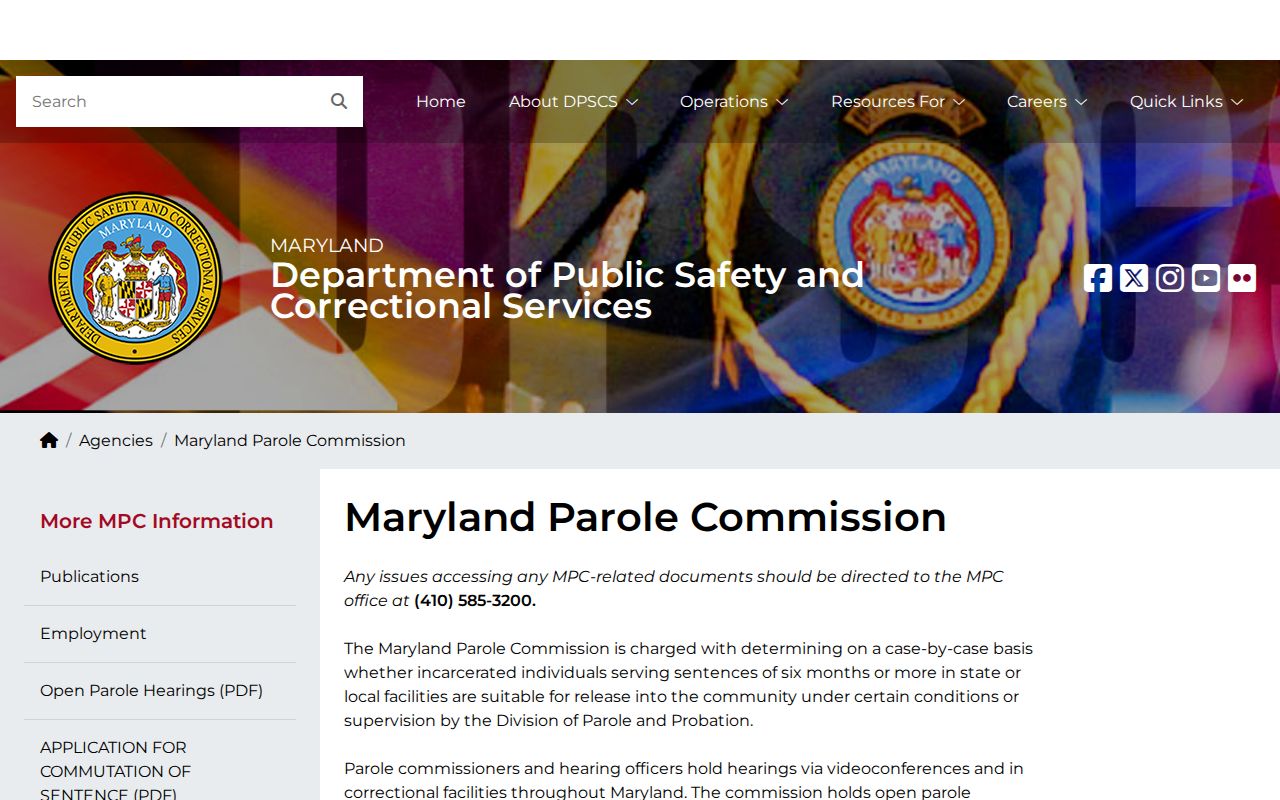
The commission source supports a request for the public action or vote. It does not disclose a private DPP reporting schedule or replace proof that release occurred.
Washington County Supervision Field Office
The DPP Hagerstown Field Office and Drinking Driver Monitor Program serve Washington County from downtown Hagerstown. DPP administers community supervision after the court or MPC establishes it. The office can explain the correct lawful channel for confirming parole, probation, or mandatory-release supervision. It may withhold private addresses, treatment details, reporting schedules, or other protected case information.
DPP Hagerstown Field Office/DDMP
100 West Franklin Street
Hagerstown, MD 21740
240-420-5140 or 240-420-5150
Fax: 301-791-5745
The state directory identifies the Hagerstown office and its two published phone lines. This screenshot ties the local contact to the official supervision agency.
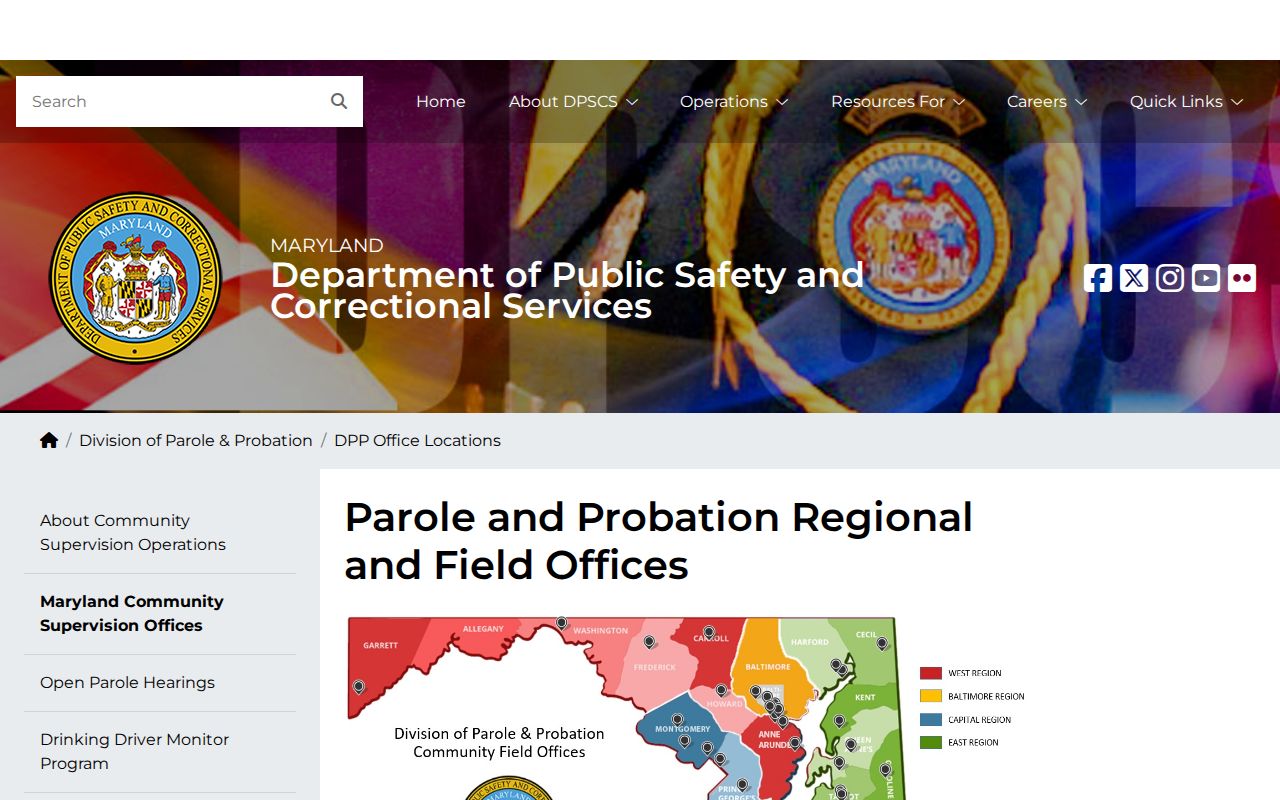
Use those numbers for routing and current contact confirmation. The office is distinct from the county jail and the local Day Reporting Center.
Washington County Day Reporting Release
Washington County has a middle status that does not fit a simple jail-or-free label. The Washington County Day Reporting Center is a nonresidential alternative linked to local commitments. A participant is physically released from confinement yet continues serving a local sentence under correctional supervision and receives sentence credit. That is not ordinary DPP parole or probation, and it is not final discharge.
Eligibility involves an active qualifying minimum sentence, a supervision term, county residence, and an eligibility review. Detainers and listed violent history can disqualify a candidate. The office reports extended weekday hours, but it is closed on major holidays. A roster removal paired with Day Reporting placement must be described as physical release into a supervised local program.
Washington County Day Reporting Center
145 IKO Way, Suite 101
Hagerstown, MD
240-313-2859
Monday through Friday, 8:30 a.m. to 7 p.m.
Closed major holidays
The official Day Reporting page documents the nonresidential program and its contact route.
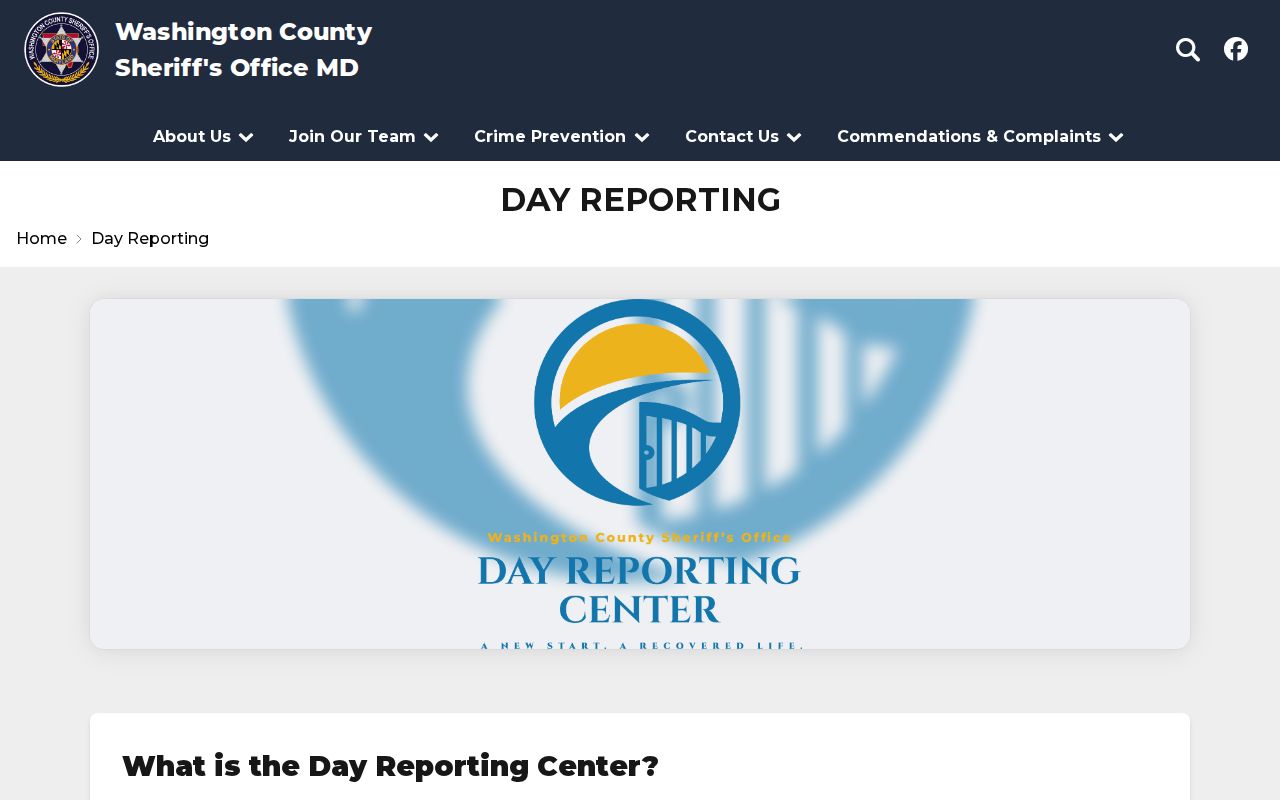
The source confirms that the county program has its own rules and office. DPP should not be called the operator of this local correctional placement.
Washington County Reentry After Release
Gatekeepers adds a separate local reentry channel. It offers intake and navigation to people within 90 days after release from a Washington County correctional facility. Its work reaches WCDC and the Day Reporting Center as well as MCTC, RCI, and other local correctional settings. The organization can help connect people with identification and document navigation, classes, and local services.
Gatekeepers is not the agency that orders or verifies supervision. A service intake does not prove parole, probation, or discharge. It can, however, help a person handle the practical steps that follow a Washington County release while the court, MPC, DPP, or local correctional authority remains the source for legal status.
Note: Reentry support and correctional supervision may overlap in time, but one does not establish the terms or end date of the other.
Washington County Supervision Violations
A violation is an alleged failure to follow a court, parole, or release condition. It does not by itself equal a new conviction. An absconder is a person supervision authorities allege has stopped reporting or complying. A warrant may seek return to custody while a judge, MPC, or other authorized body determines the result.
No official public Washington County parole-absconder database or statewide DPP person search was found. Sheriff “most wanted” material must not be relabeled as a DPP list. For probation, review the court docket for a violation filing or warrant entry. For parole or mandatory release, use MPC and DPP channels. VINE may report a later custody event, but Maryland warns that its data can lag and should not be the only source.
Conditions are set by the court, MPC, or the controlling release authority. They can involve reporting, travel limits, program participation, restitution, or conduct requirements, but the terms in one case should come from that case’s public order or authorized record. A general description is not a substitute. DPP enforces applicable conditions and can initiate a violation process, while the court or parole authority decides the legal consequence within its role.
A new custody card after an alleged violation also needs context. It may reflect a supervision warrant, a new charge, a court commitment, or another agency’s hold. Compare the new booking number and date with the supervision case. Then read any related court entry or MPC action. This keeps the earlier release event separate from the later reason for custody. Supervision ends by formal discharge, sentence expiration, court action, or another authorized closure. Finishing a jail stay is not enough. Preserve the record that states the status, effective date, scope, issuing authority, and any later modification.