
Washington County 72-Hour Releases
No official Washington County three-day release archive was found. The sheriff’s live inmate search presents current cards, not a rolling list of people who left WCDC during the prior 72 hours. It has no 48-hour alternative, published archive duration, release-only filter, or stated update interval. The absence of such a product matters most after a weekend, when several custody events may need to be reviewed together.
The three-day question cannot be answered by subtracting names from two roster snapshots. A person may leave WCDC for the community, Day Reporting, DPSCS, another county jail, USMS custody, or ICE custody. Escape, death, and an administrative change can also affect a card. The result must identify the exact WCDC movement and destination.
Check Washington County Three-Day Releases
Build the 72-hour period from dated official evidence. Save the exact time of each observation, because neither WCSO nor VINE promises instant display. The Washington County 24-Hour Releases page is better for a same-day question.
- Search the WCSO live roster and note the date and time checked.
- Use the card’s VINE link when available, or search Maryland VINE by name or identification number.
- Review Maryland Case Search for bond, commitment, release, sentence, or transfer events within the window.
- Submit a focused WCSO request for the executed movement or release record tied to the known booking.
- Compare the event time and disposition with the requested three-day period.
A court order alone may not show when jail staff carried it out. VINE can report a custody event, but the agency feed can lag. The sheriff’s movement record is the best source for release date and time, release reason, authority, and transfer destination where those fields are releasable.
Washington County Roster Data
The public interface contains current-card fields only. Its displayed date must be described as the date shown, not silently converted into a booking or release date. Crucial terminal fields are missing, which is why the roster cannot serve as a 72-hour release list.
| Available on current card | Not supplied as release data |
|---|---|
| Full displayed name | Executed release date and time |
| A displayed date | Release disposition or reason |
| Gender and age | Releasing authority |
| Charge details | Community or transfer destination |
| Booking photo | Three-day archive or retention period |
| VINE status-change link | Supervision office after release |
The official Washington County roster image shows the current search interface and card-based presentation.
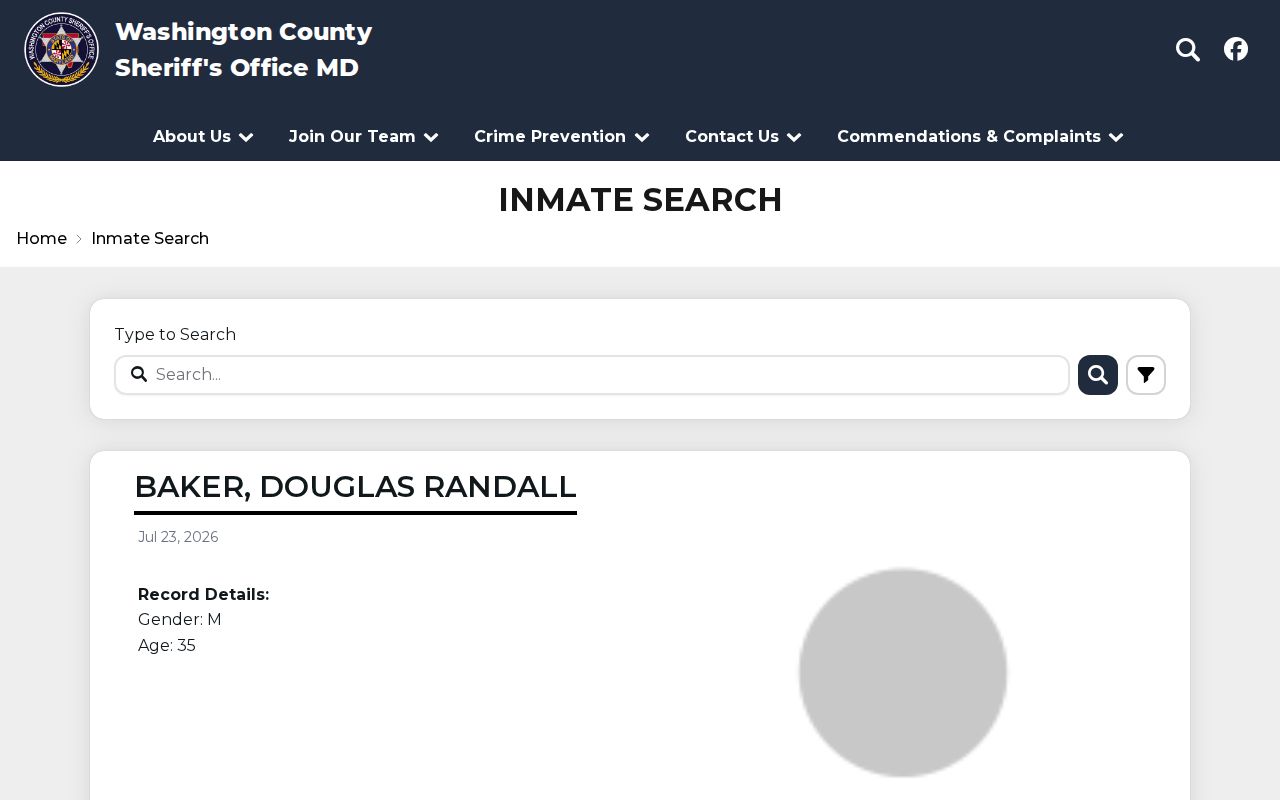
The screen is useful for establishing that a card is present. It does not document who left during a prior three-day period.
Washington County Weekend Release Checks
A 72-hour search often spans closed offices, court processing, and different data-update times. WCDC and the District Court commissioner sit at the same Western Maryland Parkway location, and the commissioner is listed as a 24-hour operation. Circuit Court bond routing differs. A bond order can permit release while the case remains open, and processing may continue after the docket event appears.
Check the next business day as well as the requested weekend. Maryland’s older VINE material describes daily transmissions of local booking and court data, so a late event may not appear at once. WCSO publishes no roster cadence. Record each observation and avoid assigning a release to Saturday, Sunday, or a holiday until an executed record gives the actual time.
For one named person across more than the three-day window, use the Washington County released-inmate search path, which separates county, state, and federal custody.
Request Washington County Release Records
The WCSO NextRequest portal is the main historical fallback. Identify the person and one booking with a date of birth or booking number and approximate admission date. Ask for electronic copies of the admission date and time, executed release or transfer date and time, disposition, releasing authority, transfer destination if releasable, associated charges, and booking photograph. A request for existing fields is clearer than asking the custodian to create a 72-hour list that does not exist.
WCSO says it endeavors to respond within ten business days. More complex or redaction-heavy requests may take up to 30 days. Maryland General Provisions §4-206 excludes the first two labor hours from fee calculation, though later actual search, preparation, review, and copy costs may be charged. Ask for an estimate and a chance to narrow the request.
The sheriff’s FAQ says prospective release dates are confidential. An already executed movement field is a different request, but access may still be redacted or denied under applicable law. Do not ask staff to predict a date or certify that someone is “free.”
Washington County Release Data Gaps
Washington County’s live cards combine useful present-custody clues with a hard historical limit. A photo, charge link, and VINE route can help match a person while the card remains visible. After removal, the interface supplies no prior card, disposition, release destination, or retention statement.
Use Maryland VINE as an event source, then compare it with the court docket and WCSO record. A VINE “released” event means release from the reporting custody source. It does not rule out a later booking, a second hold, transfer, or community supervision. Likewise, a no-result can reflect spelling, timing, coverage, or a system change rather than release.
| Custody source | What absence means |
|---|---|
| WCSO roster | No longer shown in current county custody; outcome remains unknown. |
| DPSCS locator | Not found in covered current state custody; release and escape are both excluded. |
| VINE | No matched current result; identity, feed timing, and coverage still need review. |
| BOP locator | A persistent released result can show exit from BOP, not freedom from all custody. |
Note: State the narrow fact proved by each source, such as “WCDC custody ended,” and preserve the actual disposition wording.
Washington County Release Record Meaning
A useful release record answers who was held, which custody ended, when it ended, and what happened next. Identity should be tied to the specific admission with a full name, birth date, and local booking number when available. The terminal portion should contain the executed date and time, disposition, releasing agency, and authority or destination where releasable.
“Released” in a jail-management field may mean release from that booking only. Transfer to DPSCS is proof that WCDC custody ended and state custody began. Day Reporting means physical release from the building while a local sentence continues under correctional supervision. Bond permits return to the community under court conditions but does not end the prosecution. Those distinctions are more useful than a guessed three-day list.
Retention must also be confirmed with the records custodian. The lack of a public archive does not mean WCSO destroyed the booking or release data. It means the public interface supplies no documented historical window. A request should ask whether the named booking and terminal fields remain under the applicable retention schedule. If they do not, seek the matching court order and any VINE event while keeping the limits of each source clear.
Reconstruct Washington County Release Timing
A three-day reconstruction should begin with a clear start and end time. Save the WCSO roster observation, the VINE event time, the court docket entry, and the date an agency record was obtained. Do not treat the time a web page was checked as the time the person left. A current card establishes only that the official interface presented the person as held at that observation. Its later disappearance does not reveal which hour, day, or disposition caused the change.
VINE adds a second time marker. Search by name or identification number, match the reporting agency, and preserve the status wording. Maryland says the service is supplemental and should not be the only source. Its detailed material describes daily transmission of local booking and court updates, which means an event late in the 72-hour period can appear after the period ends. A missed or delayed alert does not change the underlying agency record.
Court events form a third layer. Read bond review, bond posted, release order, commitment, sentence, time-served credit, and transfer entries in sequence. Check for a related Circuit Court case when a District Court matter advances. A docket may show legal authority for release while the jail record shows execution. It can also reveal a new commitment or warrant that affected what happened after the first order.
Finally, request the WCSO terminal fields for the named booking. Ask for the admission date and time, executed release or transfer date and time, disposition, releasing authority, and destination if releasable. Those fields can place the event inside or outside the requested 72 hours. If the response says transfer, change systems: DPSCS for state custody, the receiving county for another jail, BOP or USMS channels for federal custody, and ICE’s locator or responsible office for immigration custody.
This method produces a supportable timeline even though Washington County has no public three-day feed. It also preserves uncertainty when a source cannot answer the final question. Report “not found on the WCSO roster when checked” until the executed disposition is known. That phrasing is less dramatic, but it is faithful to the records.
Public Record Search
Sponsored Results